Daller Family - some history
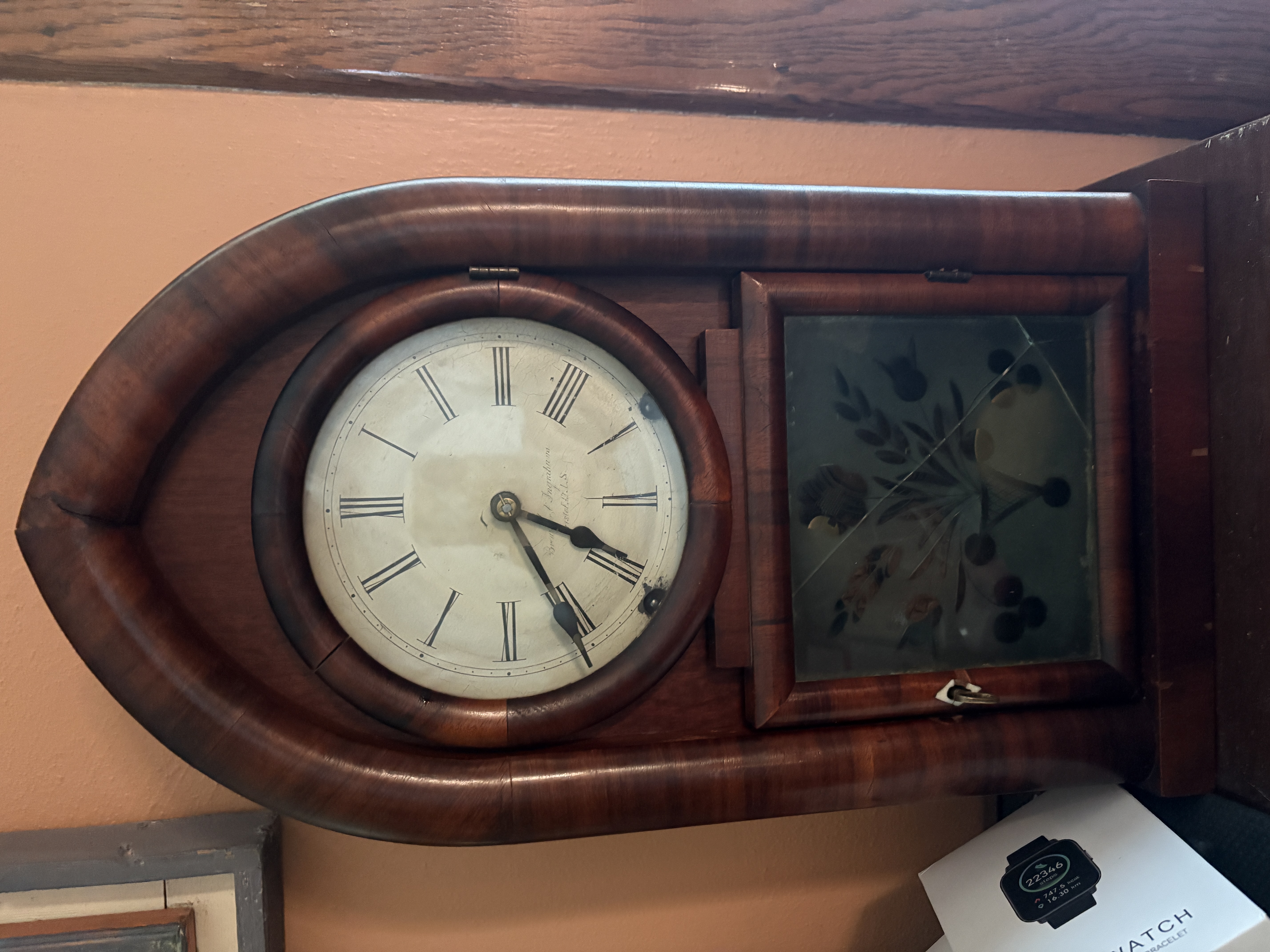
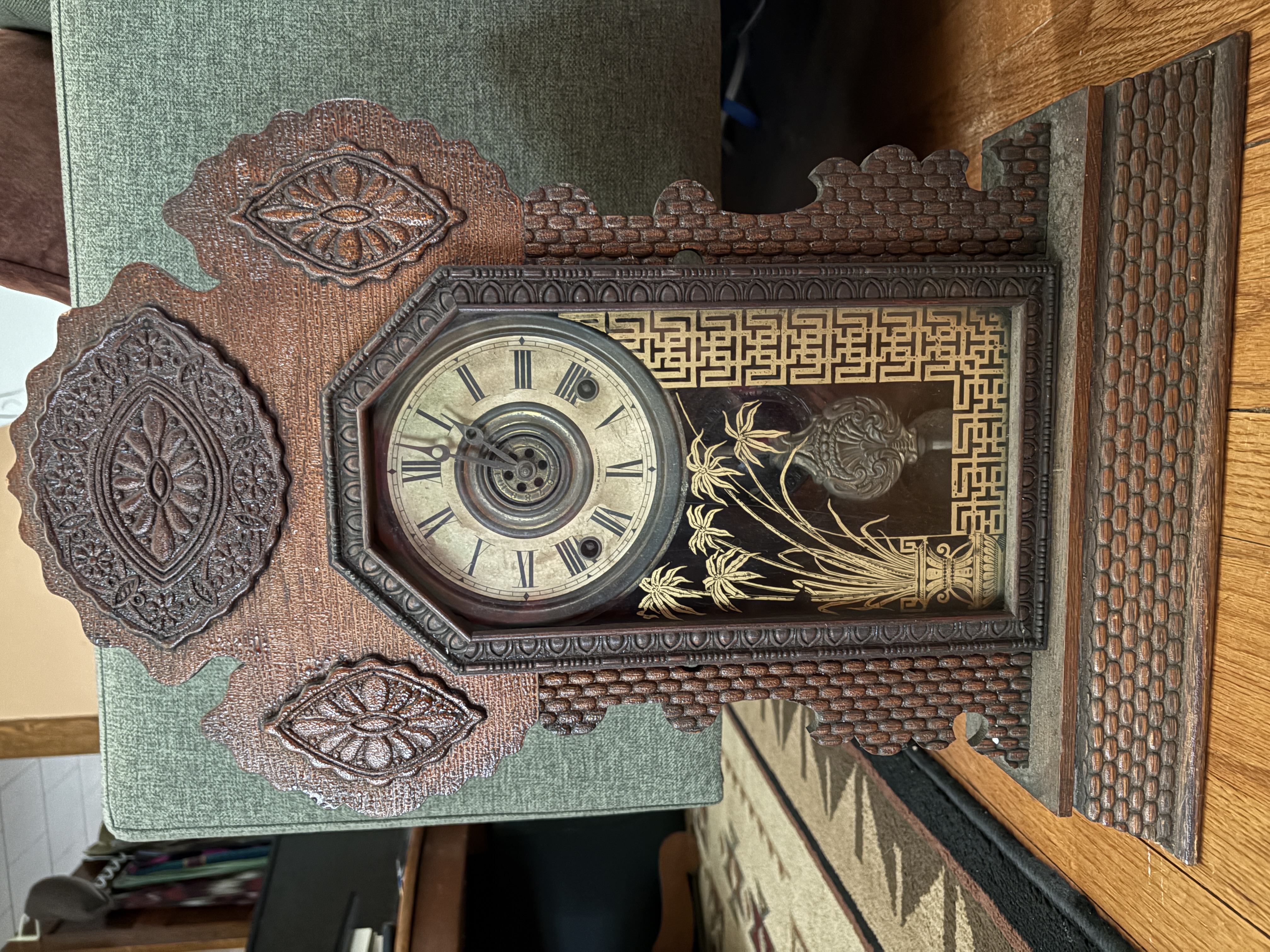
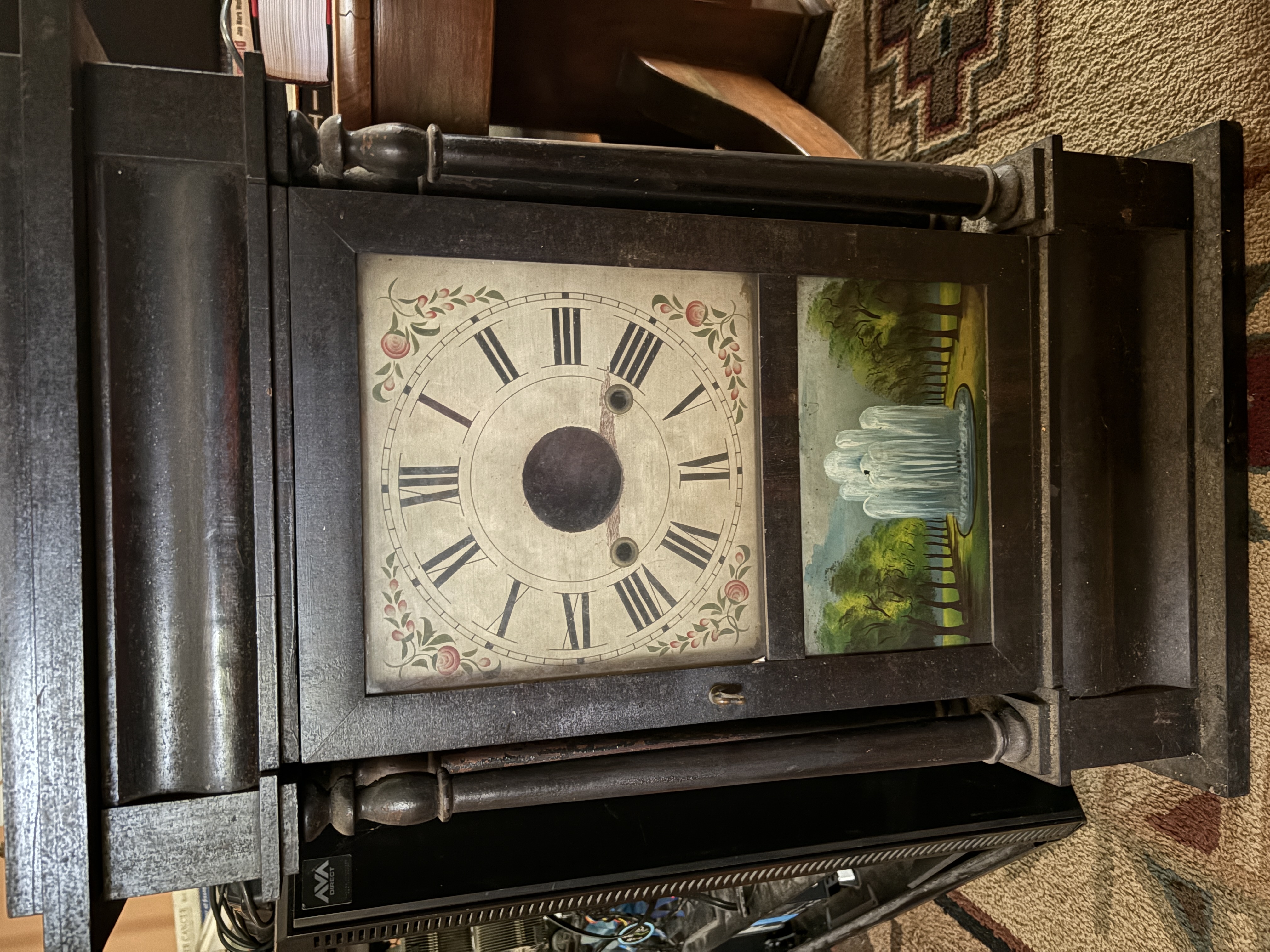
Brewster & Ingraham shelf clock
My dad wound this clock every 7 or 8 days as it sat and ran on our mantle above the fireplace all my childhood and until he passed.
On the dial it reads "Brewster & Ingraham, Bristol, CT, USA. It has Roman numerals for hour markers.
In June 2026 during servicing, we found on the back of the dial these handwritten markings:
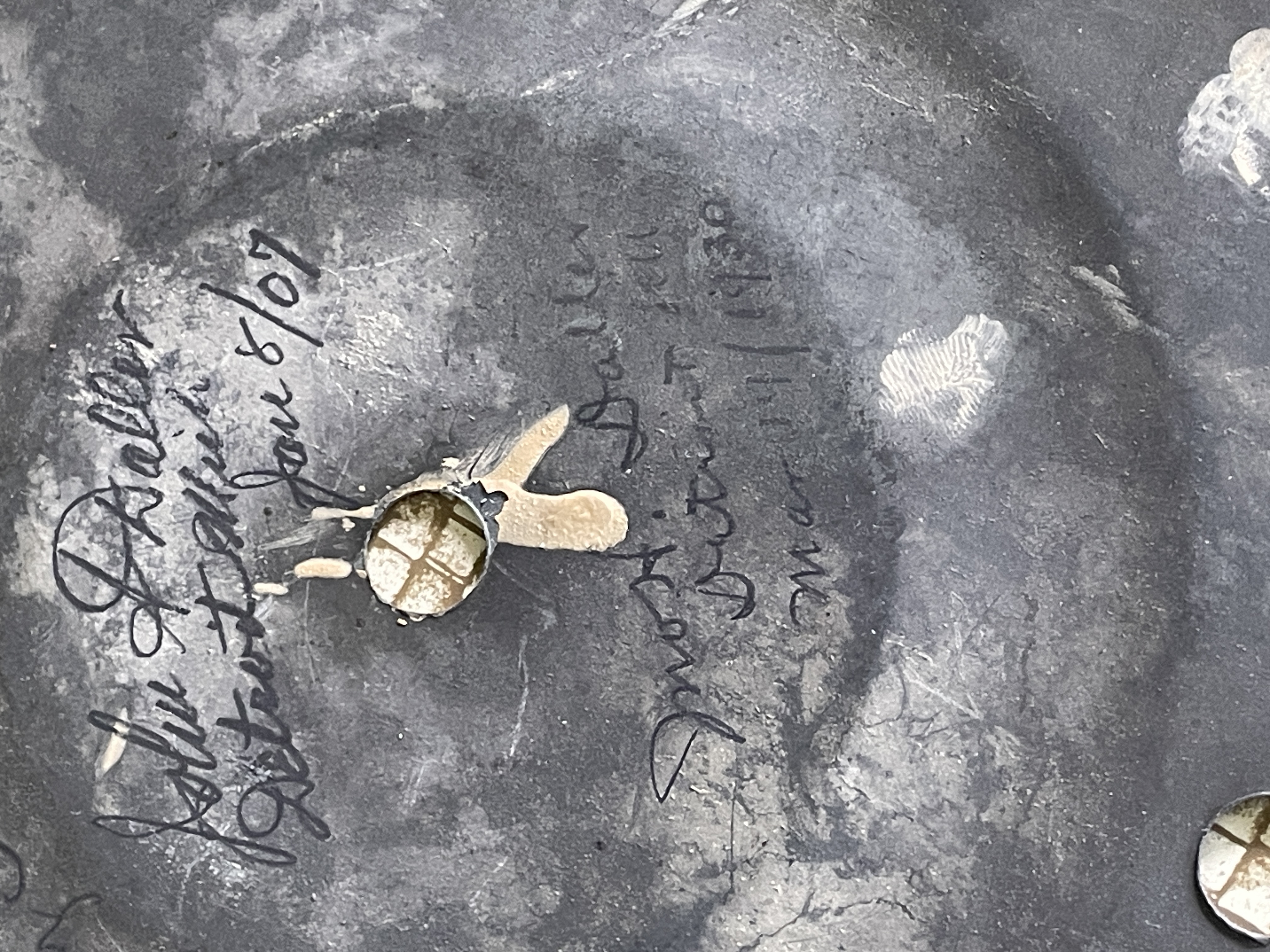
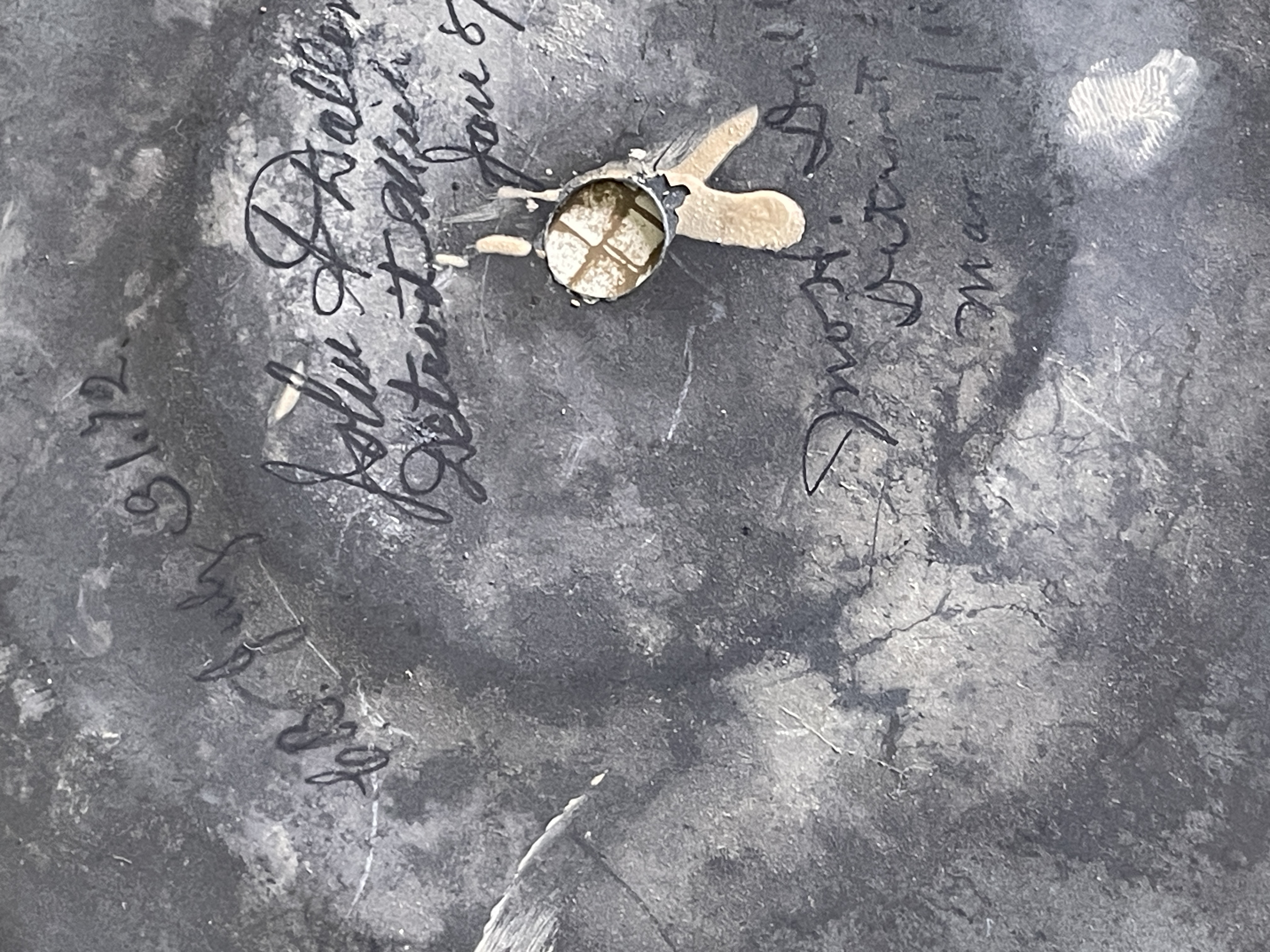
- "JnoH. Daller Detroit MI Mar 14/1930" (John Herman Daller was my grandfather)
- "John A Daller Detroit Mich Jan 8/07" (John A Daller was my great-grandfather)
- "CB July 31,72." (Possibly previous owner, or source)
It runs beautifully, and the chimes which strike the hour have a piece affixed to the striker that mutes the chimes to a gentle tone.
Jonathan Burr Ogee Clock 1936
This clock was stored by my family until June 2026 when I had it serviced by Terry (Thurlow) Riley.
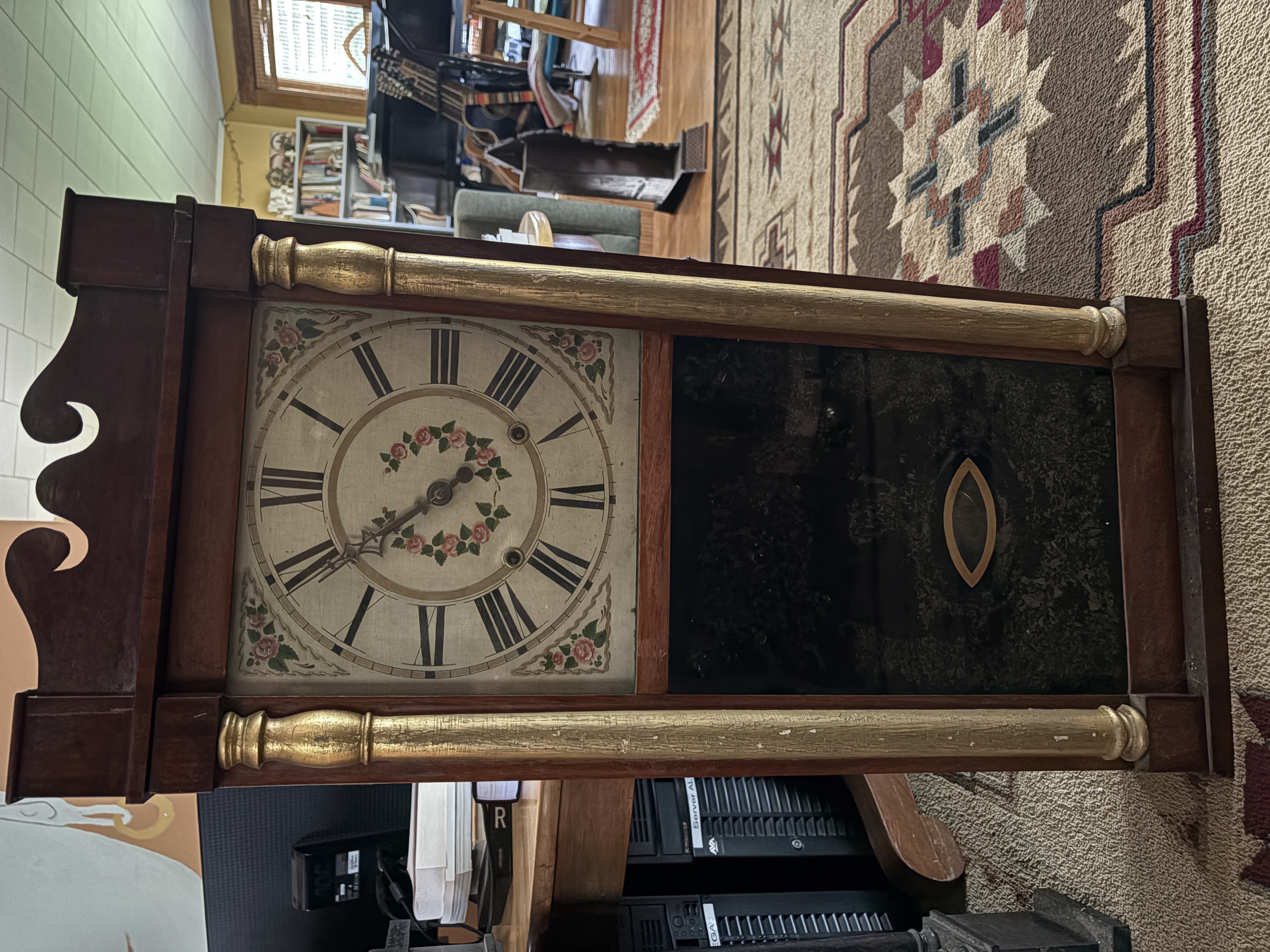
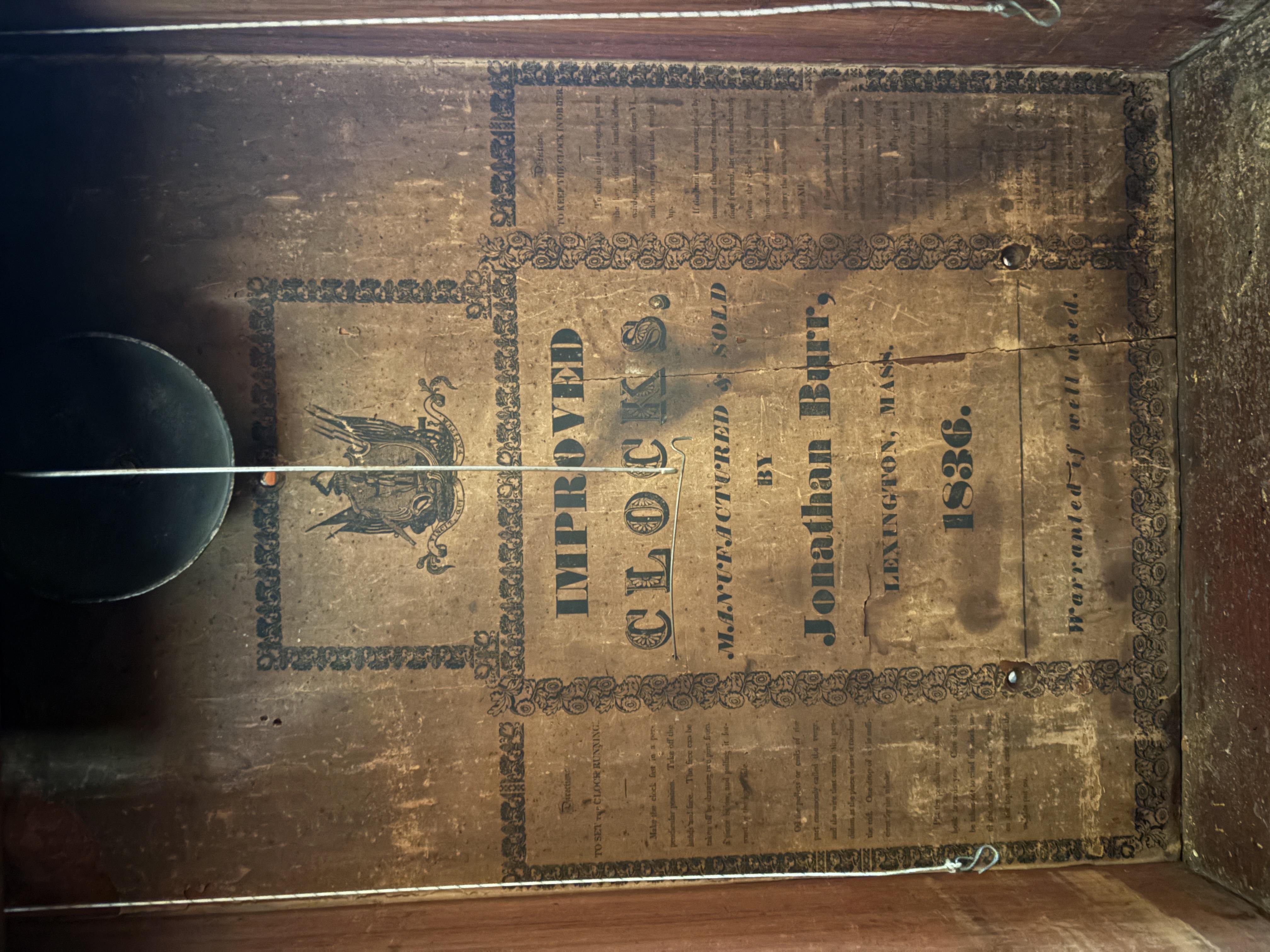
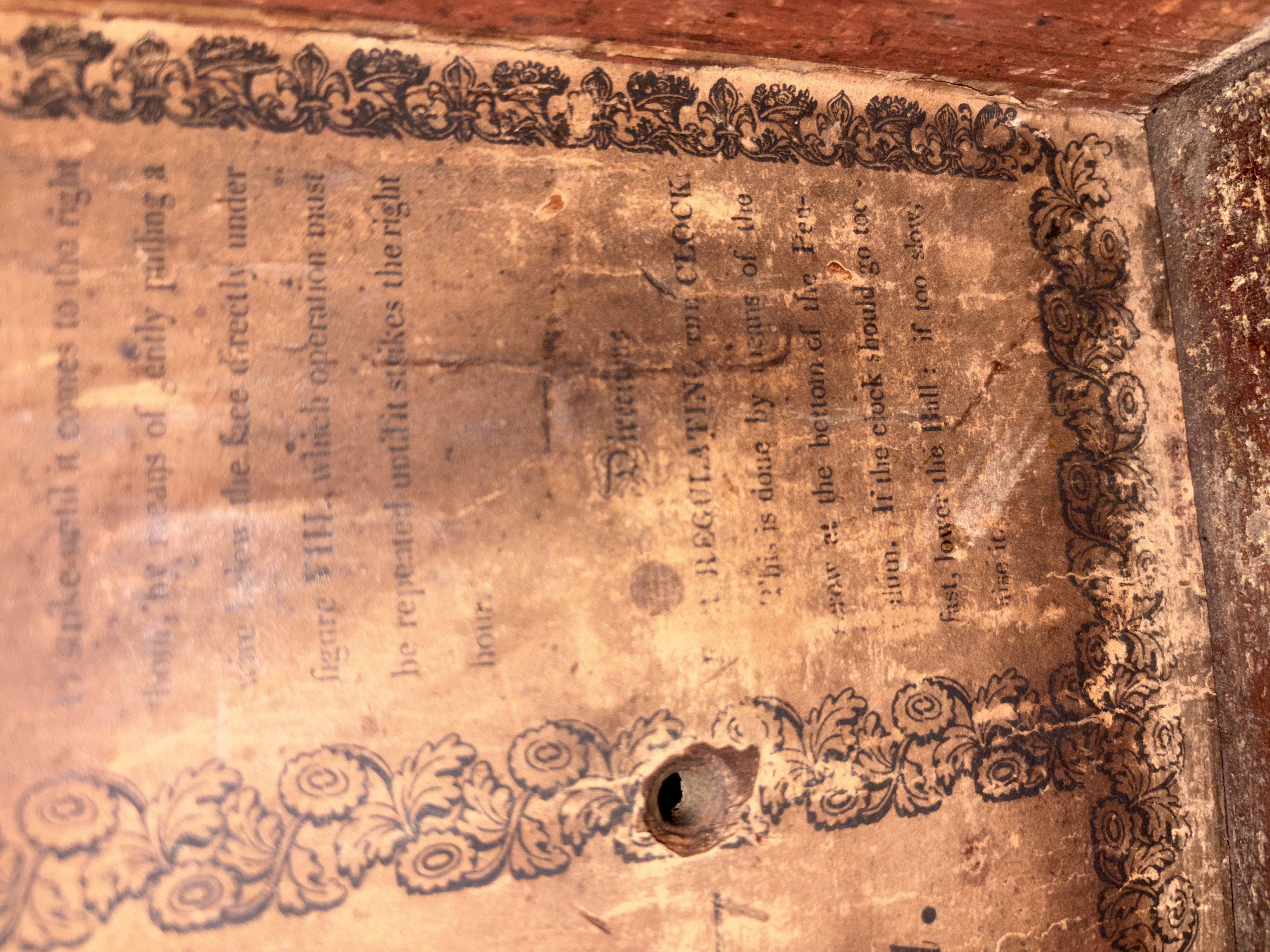
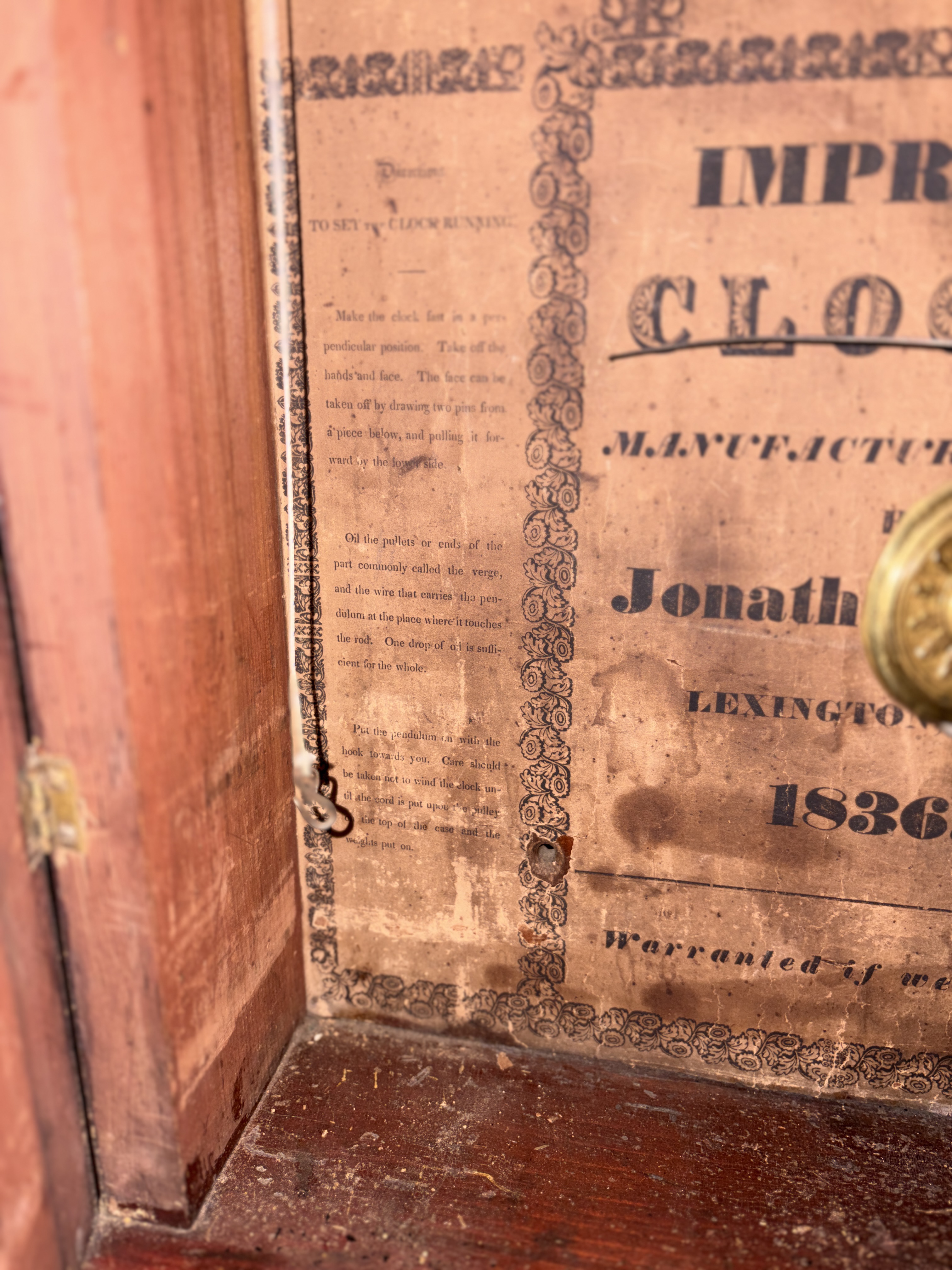
This original 1836 "Ogee" (or OG) shelf clock is a highly rare and desirable American timepiece. While Jonathan Burr is historically recognized for his massive "hollow column" and "column and cornice" styles, he also cased early version weight-driven Ogee clocks.
The Historical Context (1836)
- The Maker: Jonathan Burr operated a clock busines in Lexington, Massachusetts. He partnered with Austin Chittenden from 1831 to 1837. Clocks carrying only Burr's name on the label indicate early or independent production runs before he sold the business in 1838 and moved to Chicago.
- The "Maker" Misnomer: New Massachusetts clockmakers like Burr were actually "casers". They built beautiful furniture-grade wooden cases but purchased the actual internal geared movements from prominent Connecticut manufacturers. The works in this clock are by Eli Terry.
- The 1836 Transition: In 1836, the American horology market was in flux. Most mass-market Ogee clocks known today feature brass gears, popularized after Chauncey Jerome's 1837-1839 mass-production breakthroughs. (Before then, brass was not produced in America and was imported from England. Usually a window was in the middle of the face to show that the clock had imported brass works.) This clock predates this and contains a 30-hour weight-driven wooden works movement rather than brass.
Anatomy of this Jonathan Burr Ogee Clock
This authentic specimen features these components:
- The Case: A large heavy rectangular mantel/shelf case utilizing a distinct S-shaped "ogee" modling silhouette. Built out of pine or inexpensive woods covered in rich mahogany or rosewood veneers.
- The Lower Tablet: A split glass front door. The top displays the time, while the lower glass section, while often holding a mirror or a reverse-painted scene, is painted black in the back with a gold-ringed window in the middle to view the pendulum motion.
- The Dial: A hand-painted wooden or zinc dial face features Roman numerals, adorned with hand-painted floral and gold corner accents.
- The Mechanics: Two heavy cast-iron weights dropped via cords through internal pulley systems to drive the time and the strike train (which rings a cast-iron bell on the our).
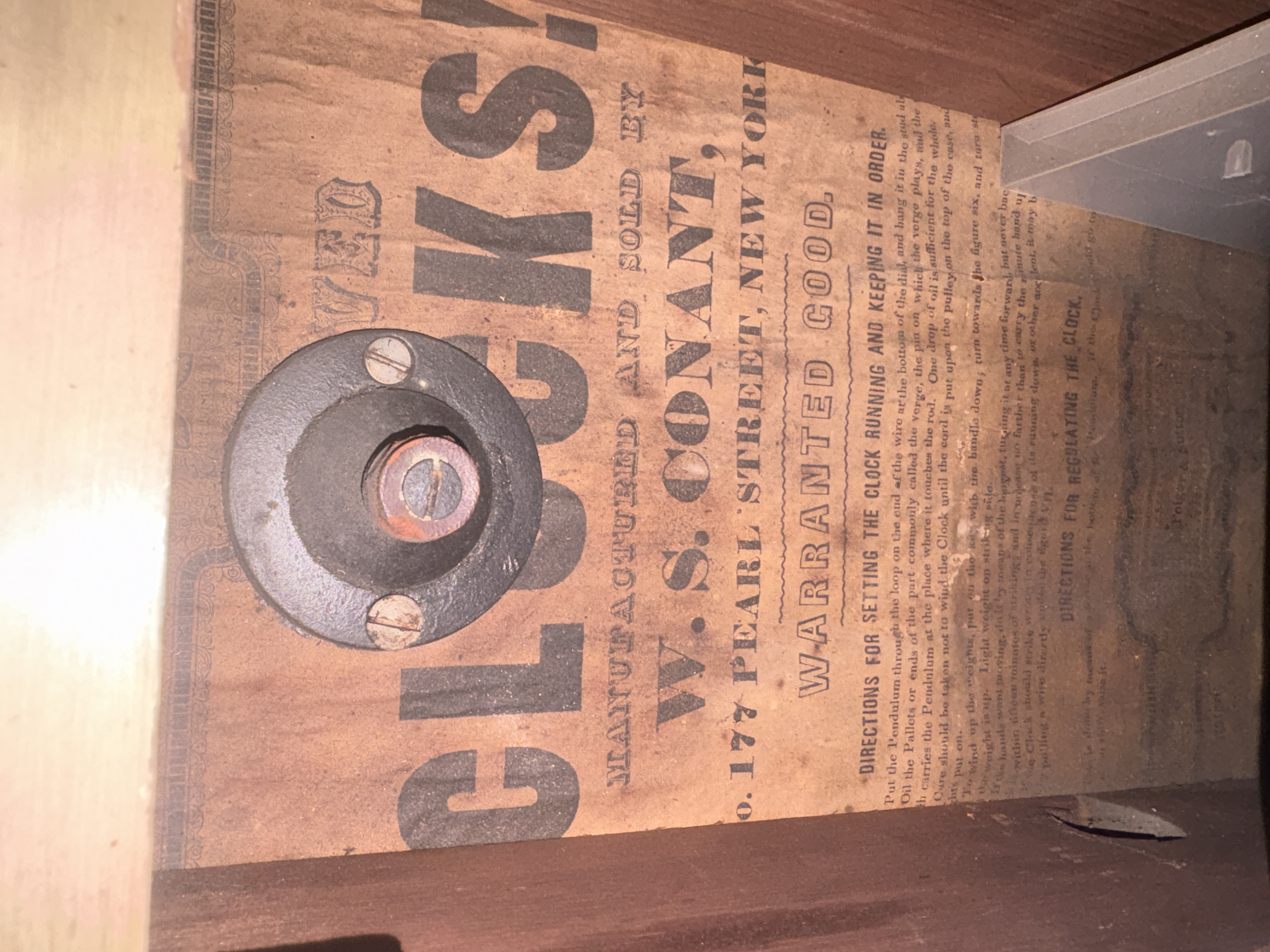
- The Label: A paper label pasted inside the backboard that reads: "Improved Clocks, Manufactured and Sold By Jonathan Burr, Lexington, Mass., 1836, Warranted if well used"
- Works: Wooden works by Eli Terry
Rarity and Value
Standard Connecticut brass Ogee clocks from late 19th-century makers like Seth Thomas or Noah Pomeroy are common and usually valued between $75 and $200. However, a pre-1840 Massachusetts Ogee clock by a scarce maker like Jonathan Burr-especially one retaining its fragile wooden gears, original weights, and internal paper label-is a collector's item. Depending on the condition of the wood veneer and the presevation of the painted dial, (both of which are in wonderful condition), these rare variannts can appraise for $300 to $600+ at specialty antique auctions.
Wooden Works by Eli Terry
Eli Terry became one of the most accomplished mechanics in New England during the early part of the nineteenth century. An inventor and clockmaker in Connecticut, Terry is considered the father of the American mass-production clock industry. Born April 13, 1772 in East Windsorm CT, British America, Terry apprenticed himself to clockmaker Daniel Burnap at age 14 before opening his own business in 1793. Four years later, Terry received the first clock patent granted by the United States Patent Office, for a shelf clock mechanism—one of 10 such patents awarded to Terry during his lifetime.
Terry occupies an important place in the beginnings of the development of interchangeable parts manufacturing. He introduced mass production to the art of clockmaking, which made clocks affordable for the average American citizen. Terry is considered the first person in American history to actually accomplish interchangeable parts with no govenment funding.
By both mass-producing popular wooden shelf clocks, as well as designing more sophisticated brass-geared clocks for sale overseas, Eli Terry helped make the area later renamed Terryville the leading clock-making center in the United States by the time of the Revolutionary War.
Terry died February 24, 1852, Terryville, Plymouth, CT, United States of America.
The following is partially what is printed on the back paper. When I get the clock back from servicing, I'll be able to get a more accurate transcription.
Directions
TO KEEP THE CLOCK IN ORDER
To wind up the weight, put on the key with the handle downward, turn towards the figure VI, and turn steady until the weight is up.
If the
Directions
TO SET THE CLOCK RUNNING
Make the clock fast in a perpendicular position. Take off the hands and face. The face can be tajeb off by drawing two pins from a piece below, and pulling it forward vy the lower side.
Oil the pullets or ends of the part commonly called the verge, and the wire that carries the pendulum at the place where it touches the rod. One drop of oil is sufficient for the whole.
Put the pendulum on with the hook towards you. Care should be taken not to wind the clock until the cord is put upon the pulley on the top of the case and weights put on.
Clocks
There is one more antique clock in storage that I haven't located yet.
Pocket Watch
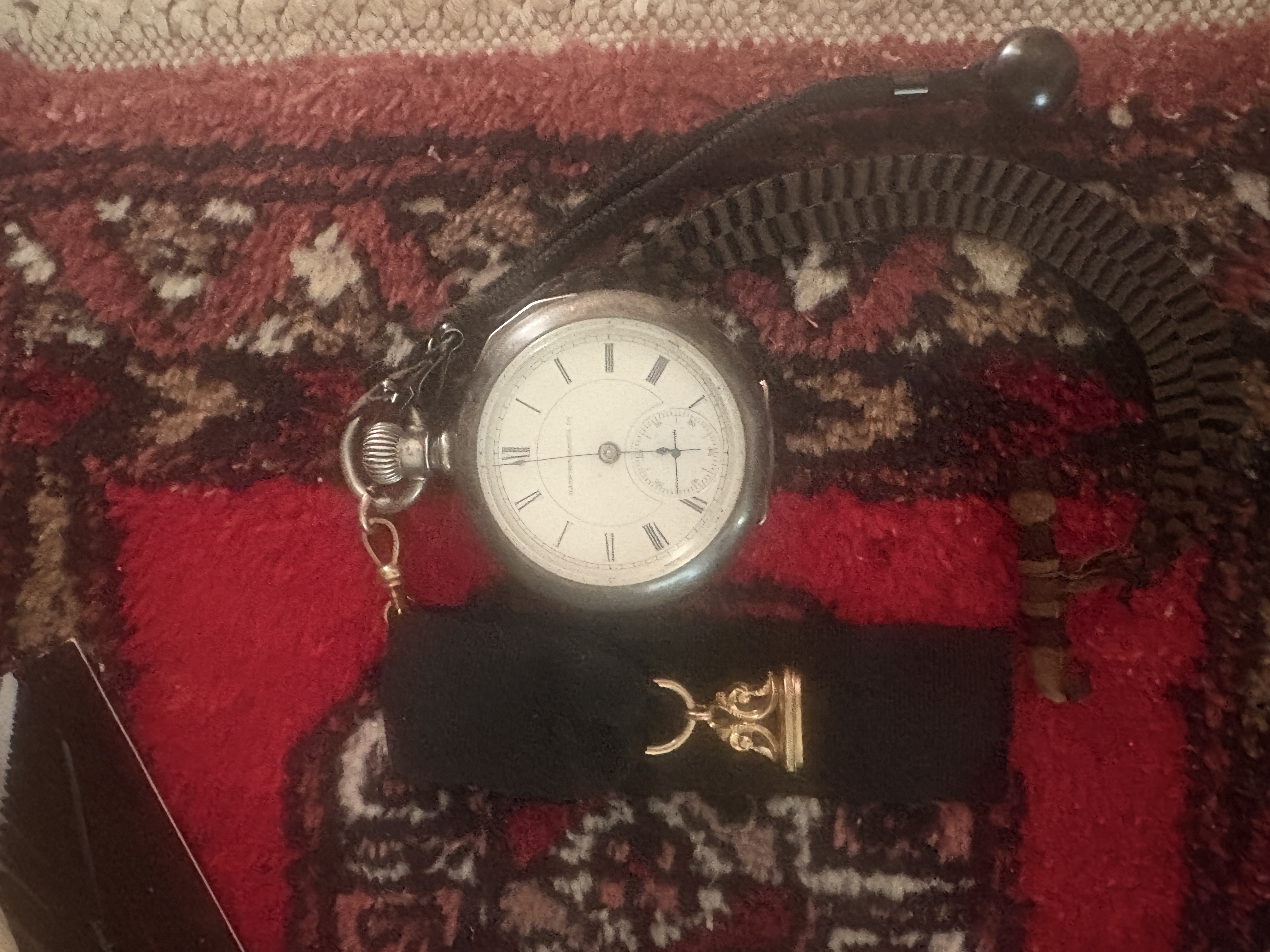
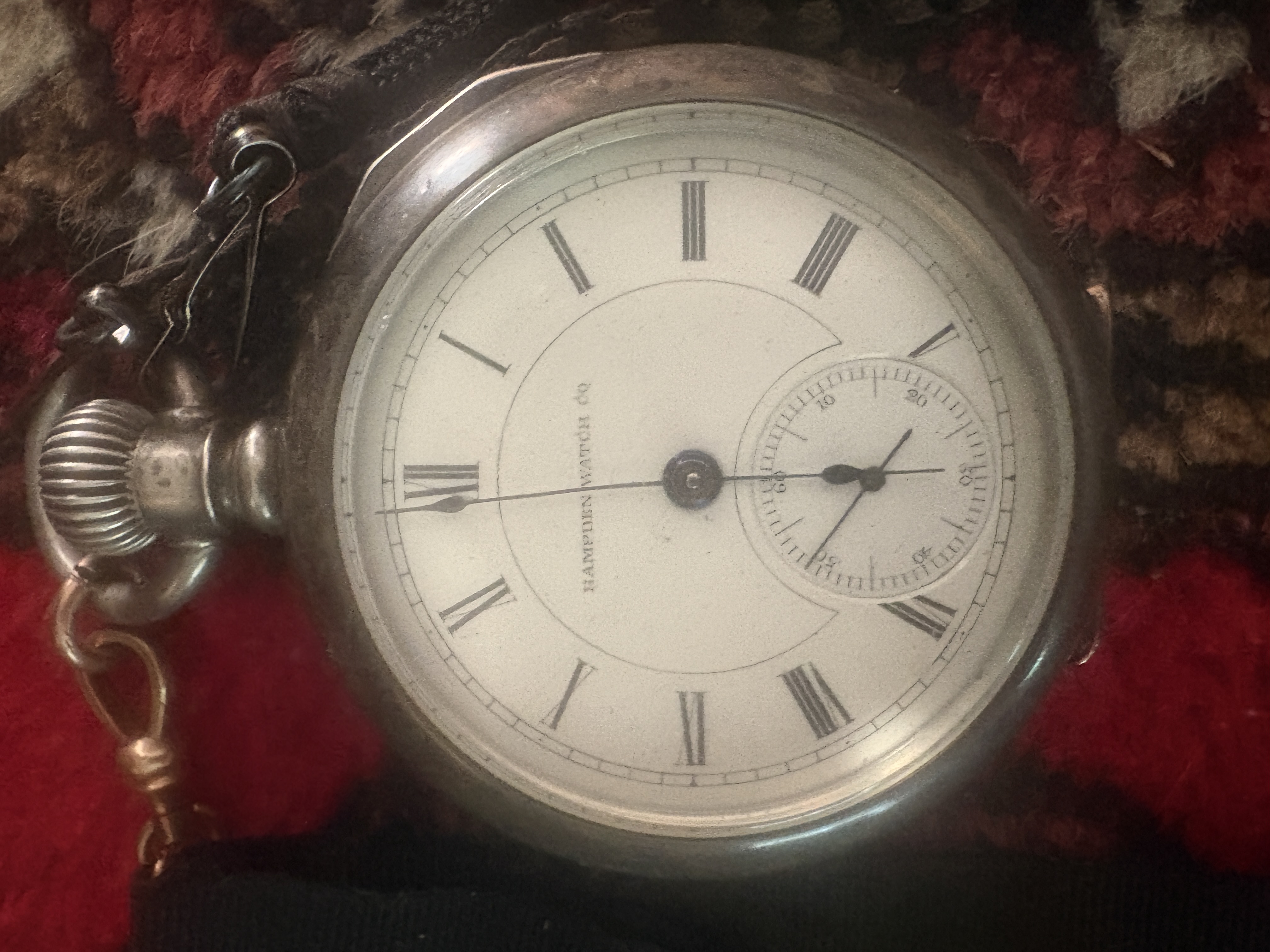
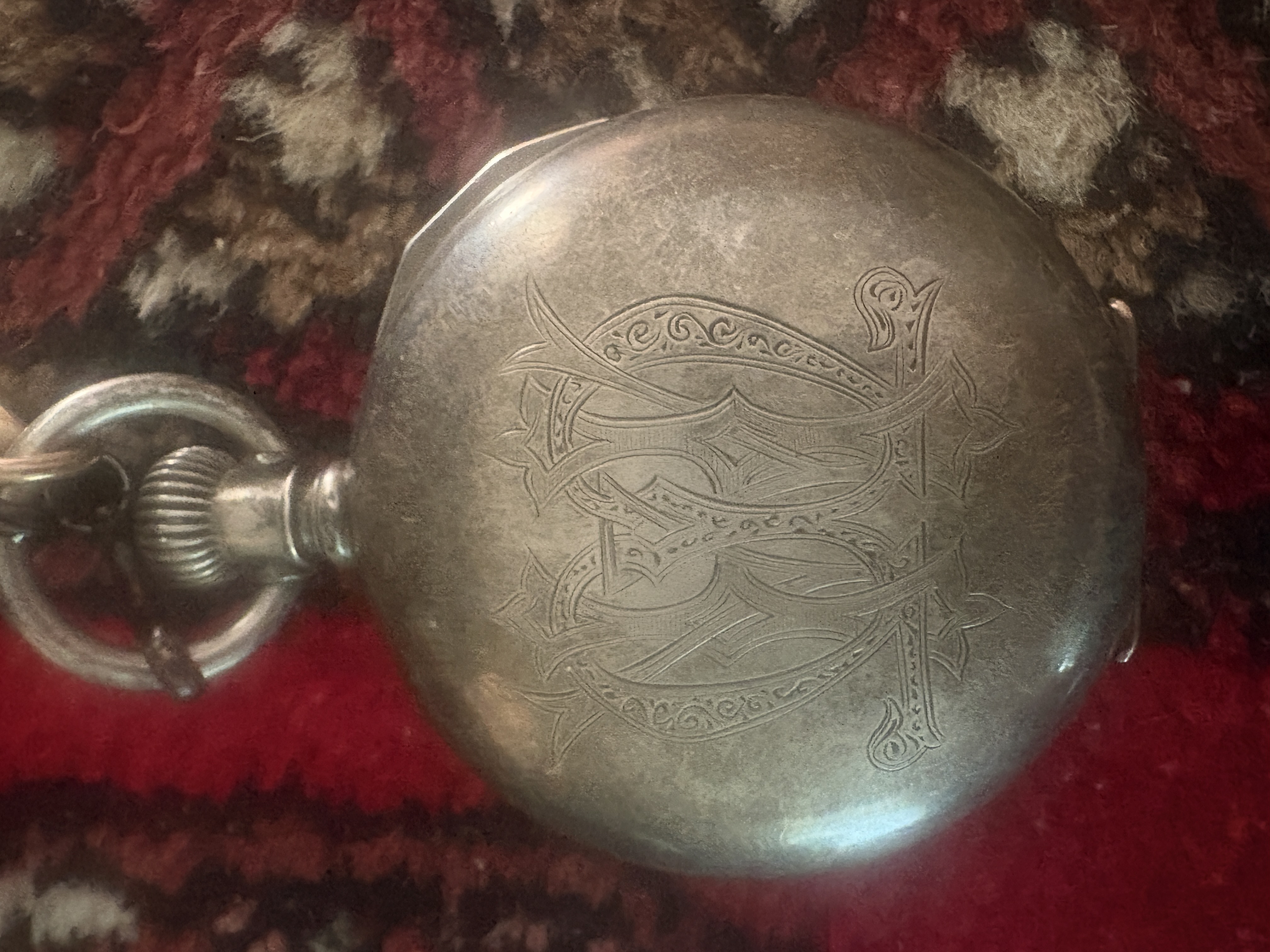
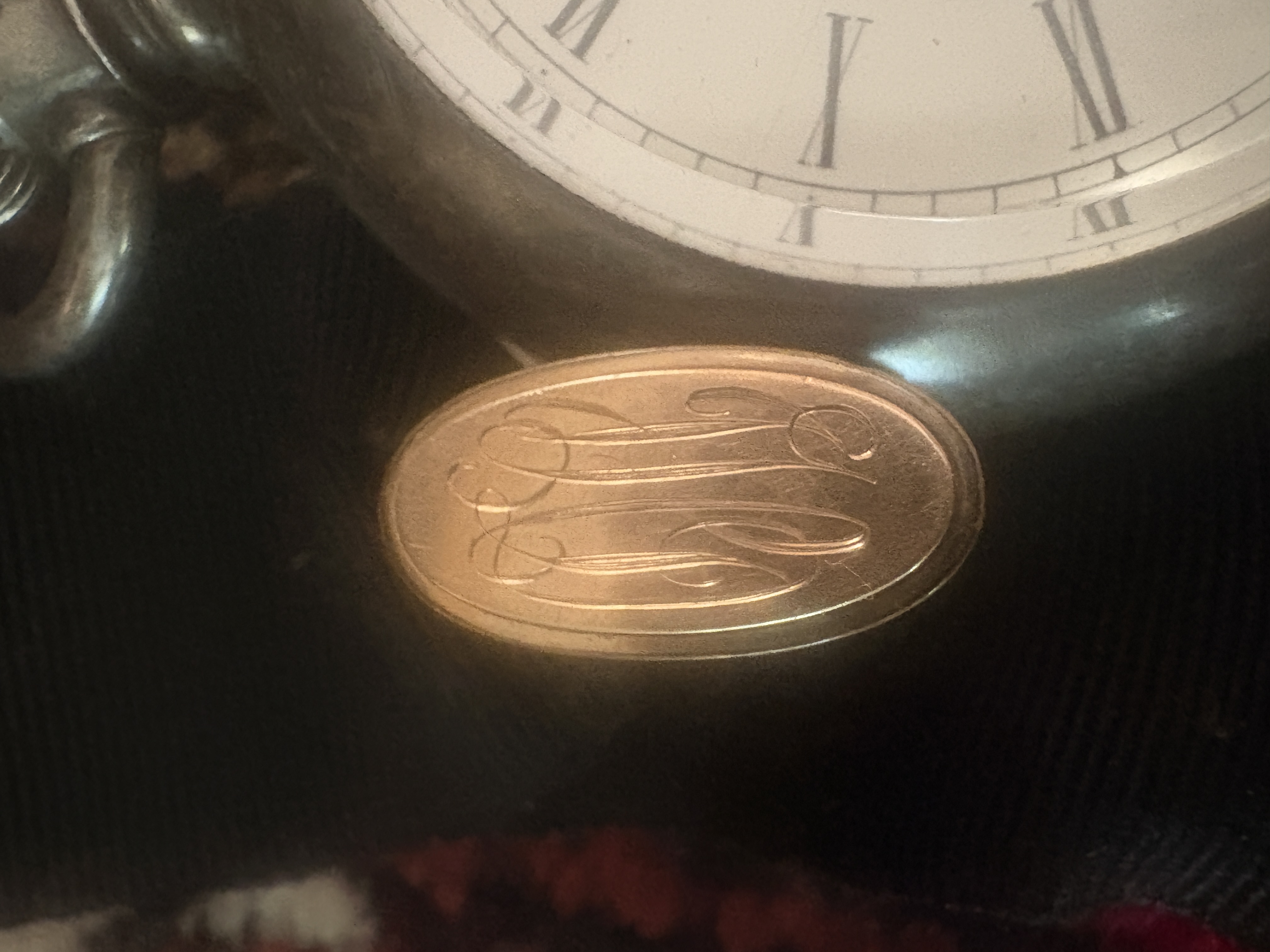
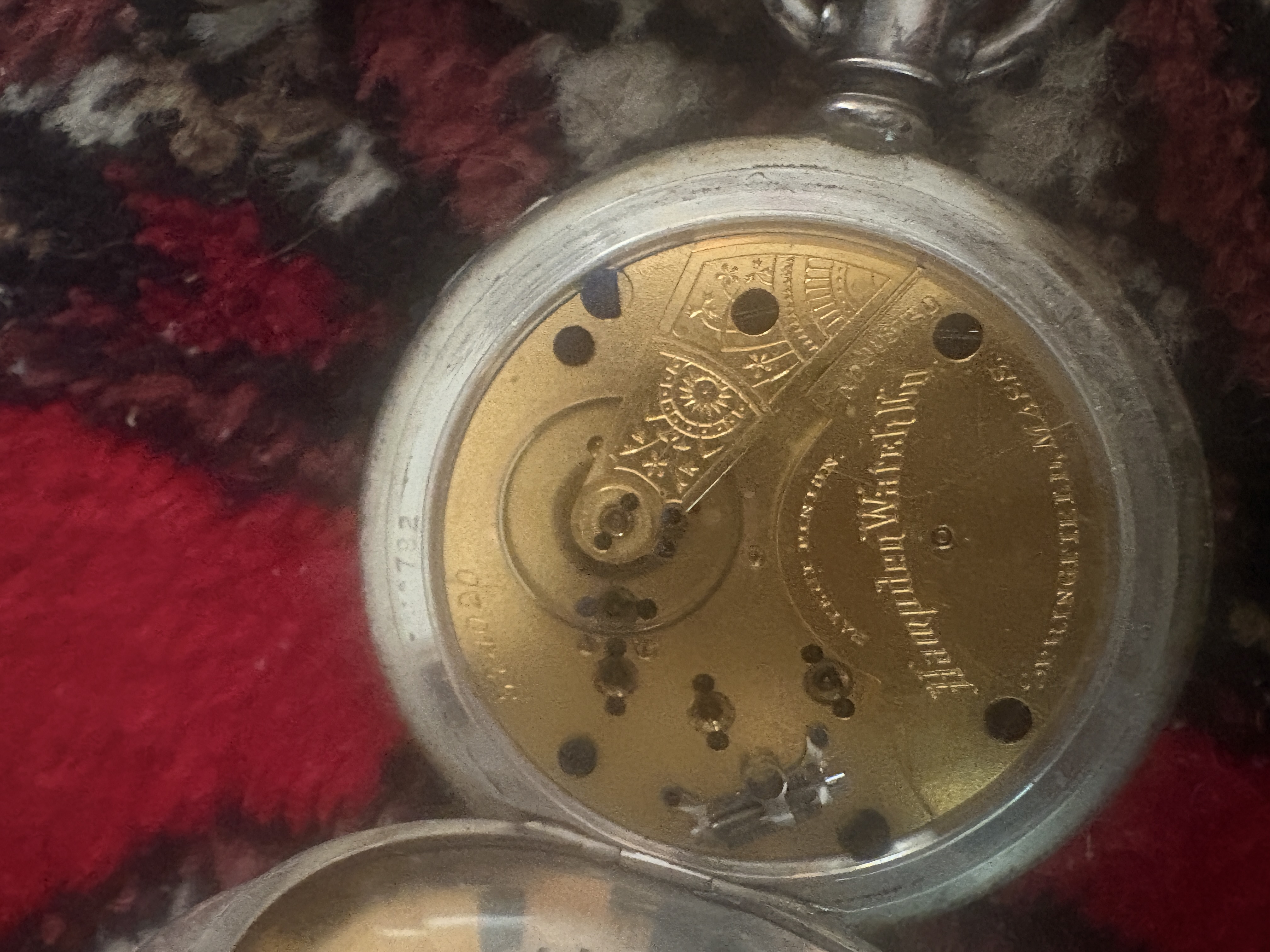
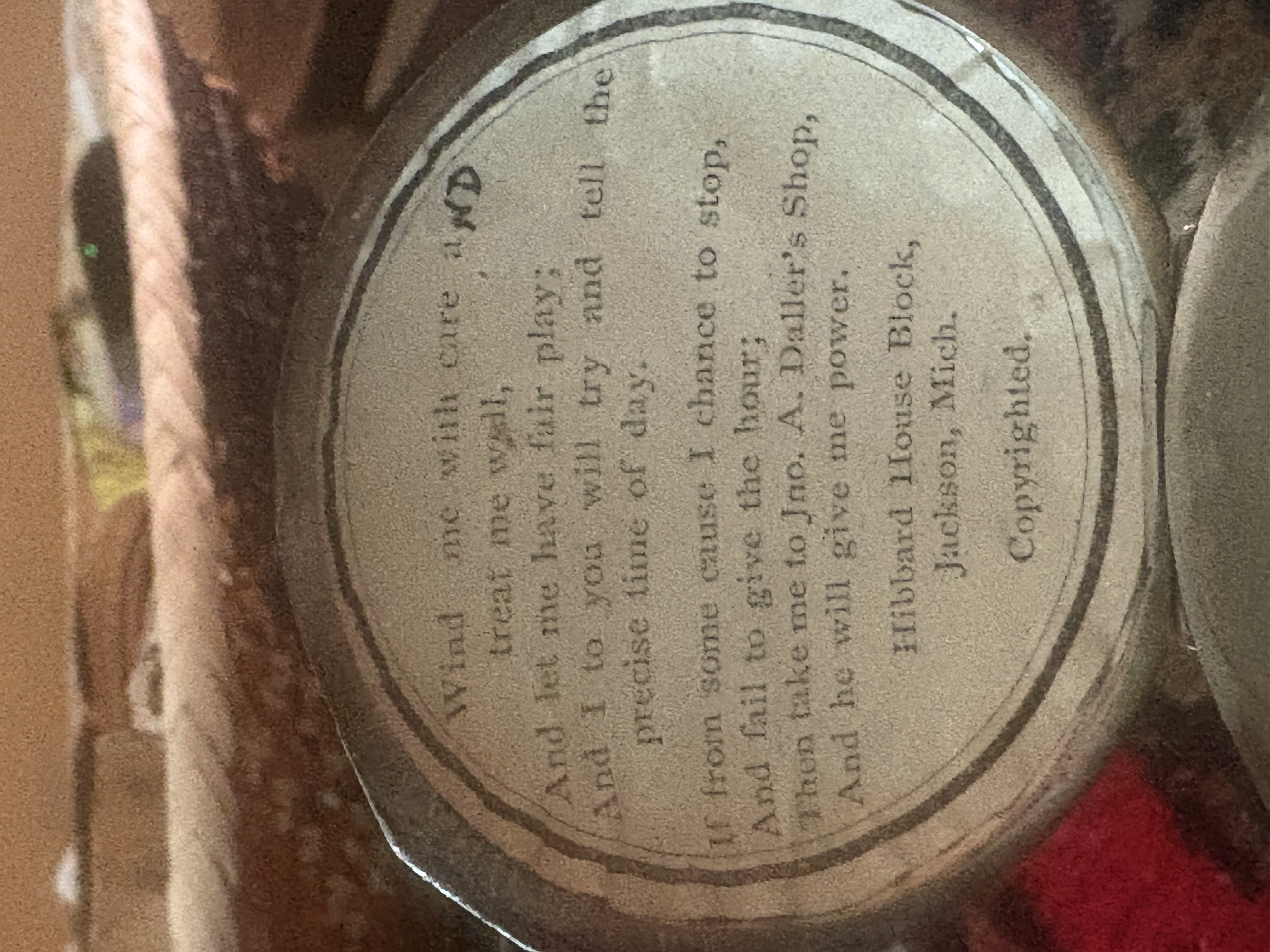
This watch has on the back the monogram WHM of William H. Manning, 1829-1890, father of Cora Isabelle Daller, wife of John Albert Daller, father of John Herman Daller, father of Donald John Daller, father of Douglas Howard Daller (me). So my great-great grandfather, my great-grandfather's father-in-law, my great-grandmother's father
Wind me with care and
treat me well,
And let me have fair play;
And I to you will try and tell the
precise time of day.
If from some cause I chance to stop,
And fail to give the hour;
Then take me to Jno. A. Daller's Shop,
And he will give me power.
Hibbard House Block,
Jackson, Mich.
Copyrighted.
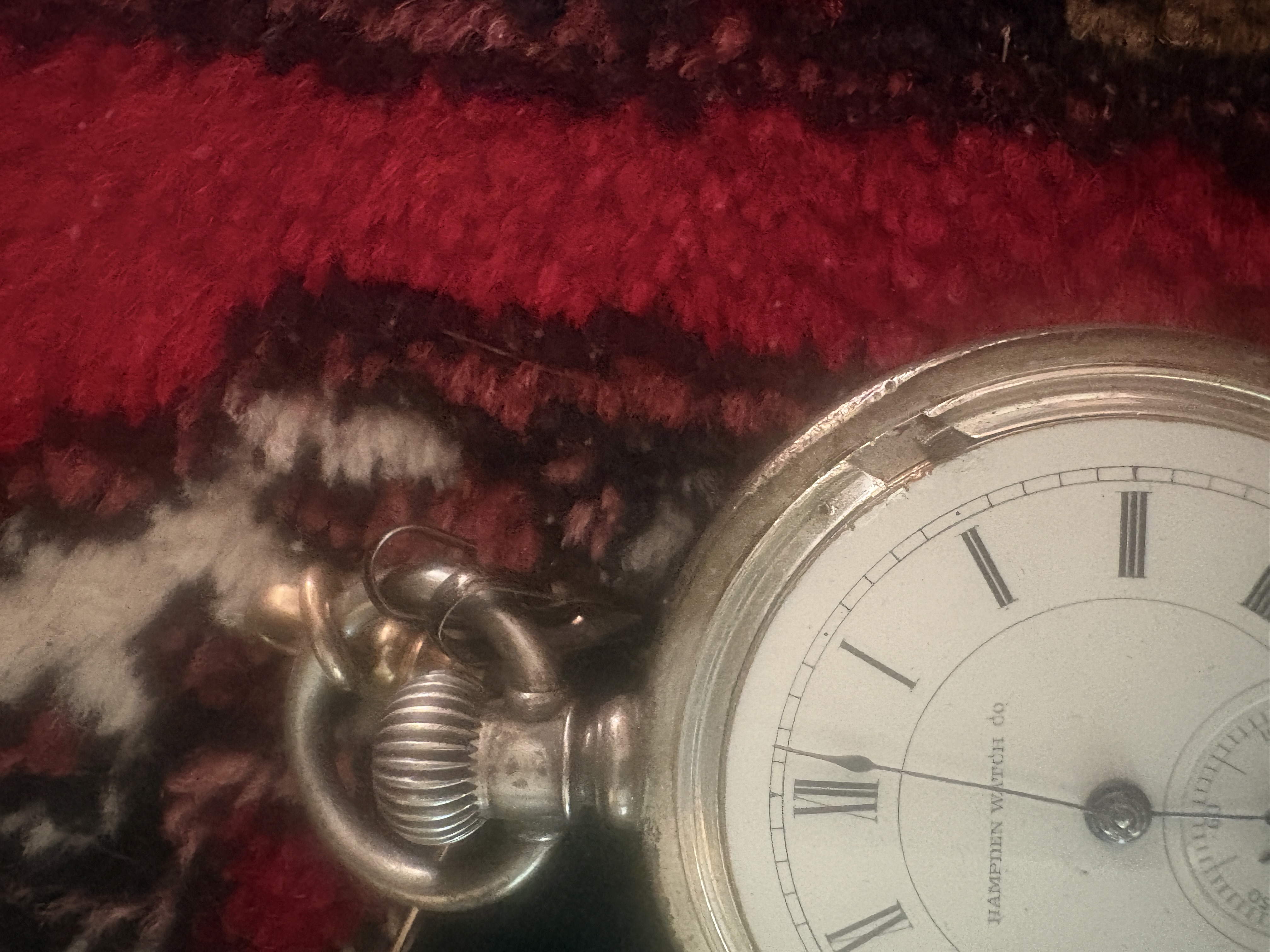
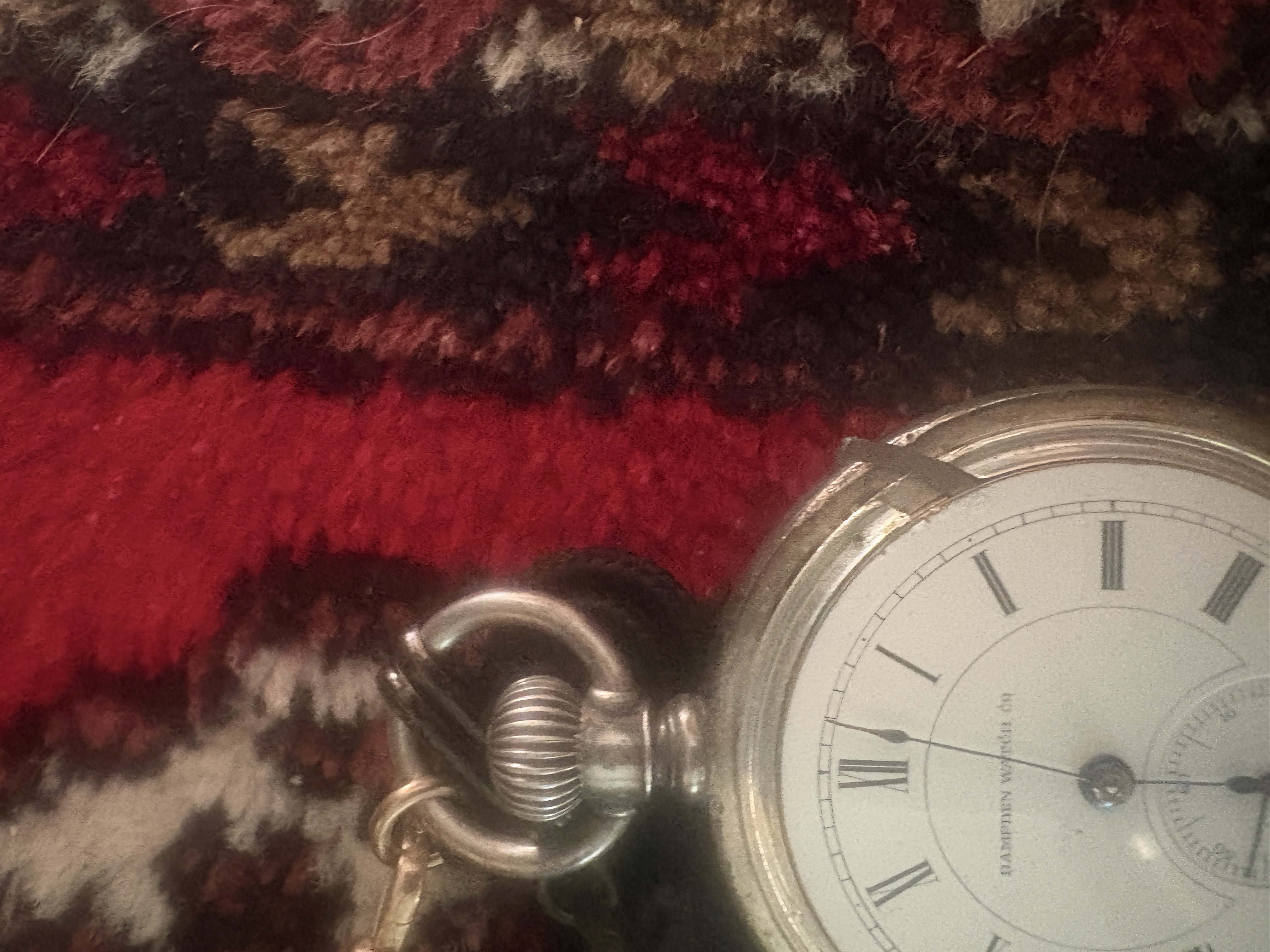
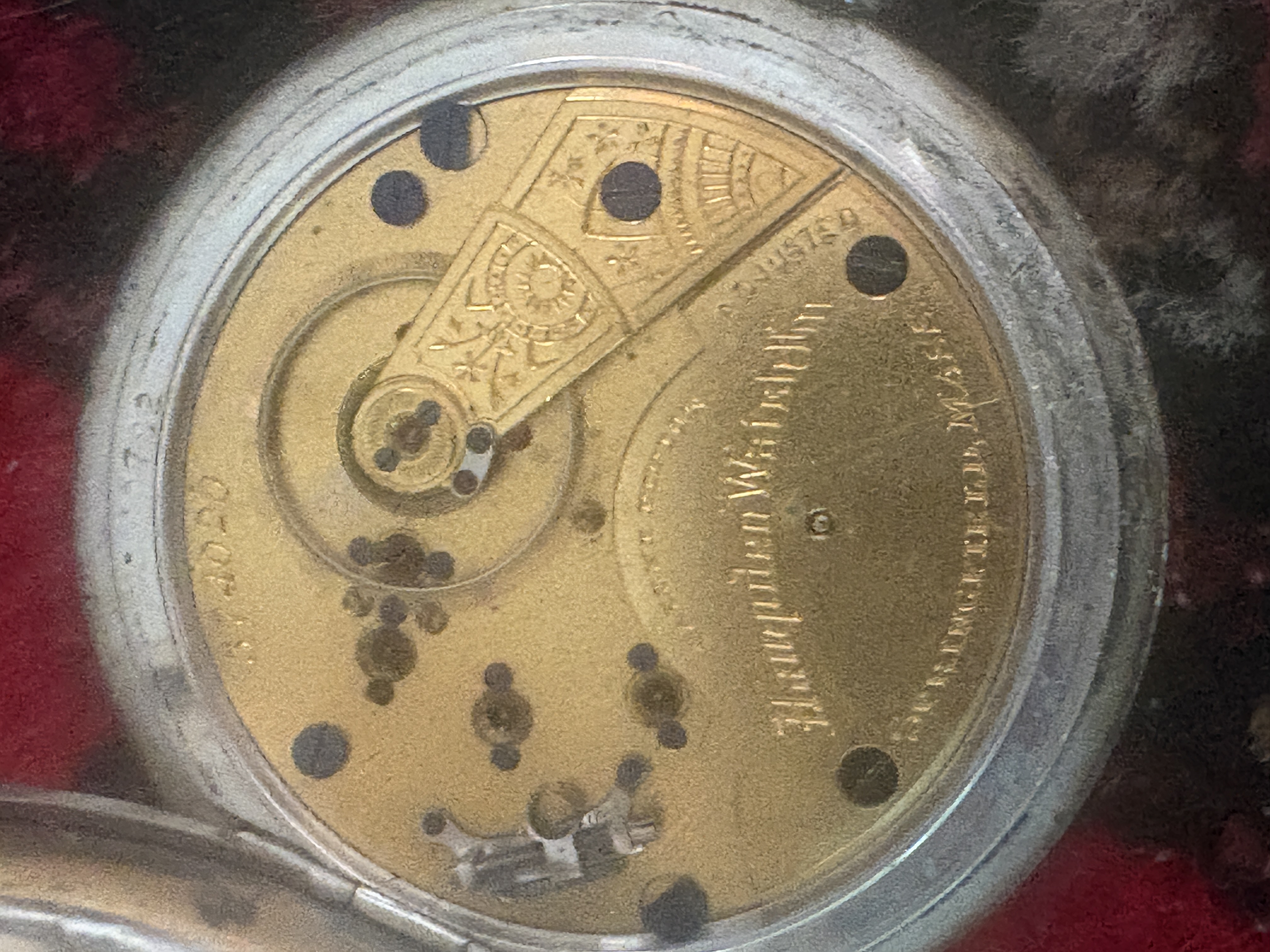
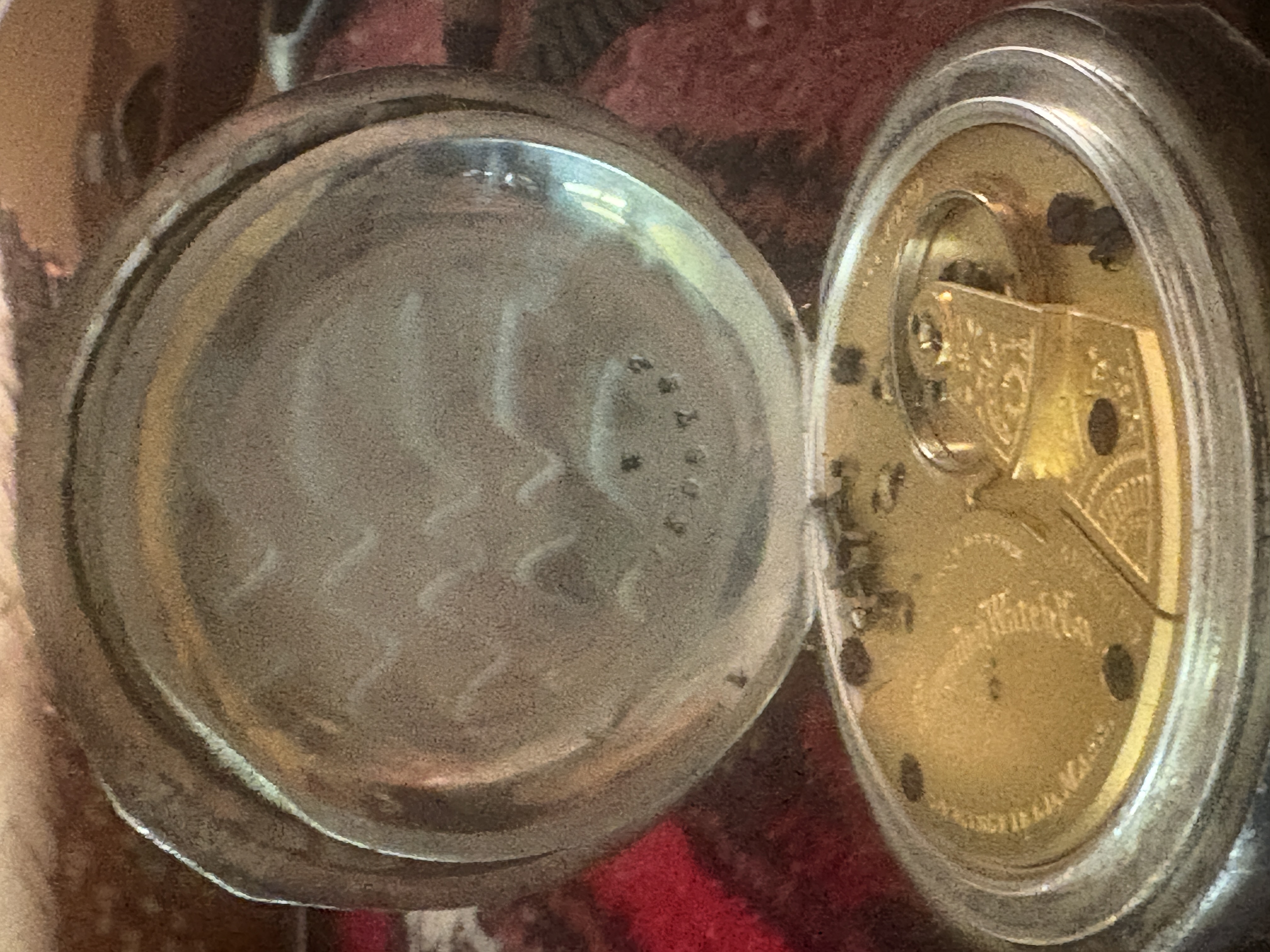
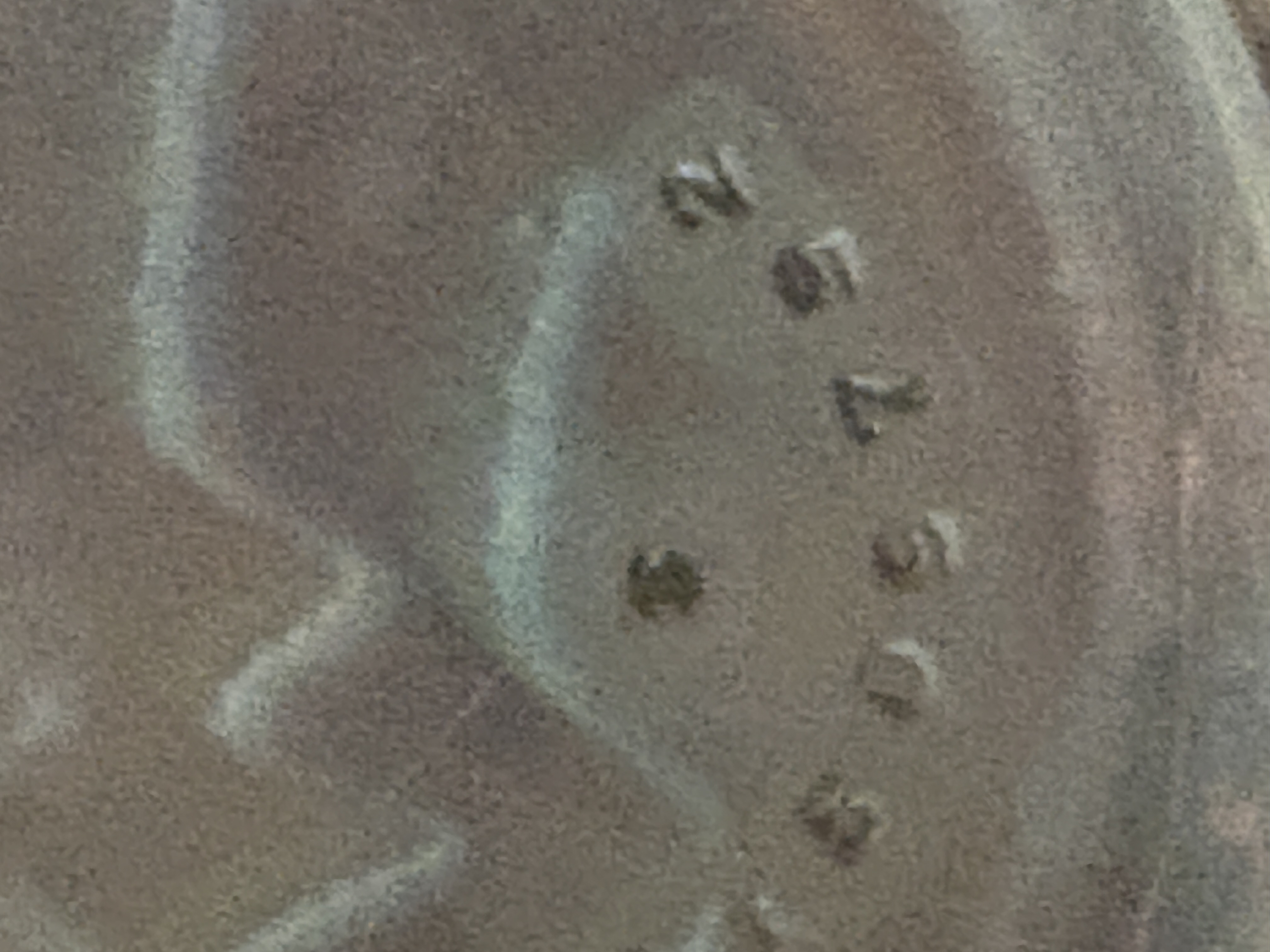
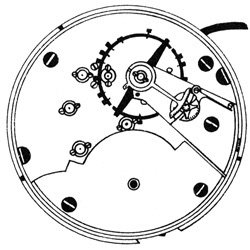
It was made by Hampden Watch Co. in about 1855. The action is gold gilt, with 15 jewels, which are rubies that are frictionless for the axles of each rotating piece. It has a lever inside the face that allows the time to be set. And inside the back is a paper, fitted to the back with a poem about Jno. A. Daller's shop. John Albert Daller was my great-grandfather who owned and operated a jeweler's shop in Jackson, Michigan.
June 24, 2026 I took it to clock and watch repair expert Ted (Thurlow) Riley in Ottumwa. It has a lever inside the face that allows the time to be set. He recounted the development of the lever: There was a famous, horrendous train crash that was attributed to one of the conductor's timepiece being off by 4 minutes. The train company requested this development: previously, the winder on a pocket watch could also change the time by merely pulling it out and continuing to turn. The lever prevented this from accidentally happening during winding. Only by opening the faceplate, pulling out the lever and then turning the winder could the time be changed.
- From pocketwatchdatabase.com:
- Hampden Watch Co.
- Manufacturer: Hampden Watch Co.
- Grade: No. 55
- Initial Marking: H.W. Co.
- Location: Springfield, Massacusetts and Canton, Ohio
- Years of Operation: 1877-1827
- Movement Serial Number: 374020
- Grade: No. 55
- Model: 3
- Estimaged Production Year: 1885
- Size: 18s
- Jewels: 15j
- Movement Configuration: Openface
- Movement Finish: Gilt
- Movement Settings; Lever
- Plate: Full Plate:
- Regulator: Teske
- Adjusted: Yes
- Dial Feet Locations: 21.7, 37, 59
- Case: Various
A few pictures I've recently acquired. I have many truly 'ancient' family pictures, even some daguerreotypes, that I would like to scan and add. Here's a few I discovered online:


Pictures of Family Silver
 Daller.jpg "Daller Family - date taken: 2023:10:12 11:24:39")
 Daller.jpg "Daller Family - date taken: 2023:10:12 11:25:05")


Denke nach - Think about
Uebungen im Zusammenseken - Exercises in collections
von - of
Tierbildern - Animal images
Aug. Specht - August Specht
Probably over 100 years old, no doubt brought from Germany by ancestors, this box of puzzles was given to my Dad, Donald Daller (1911 - 2001), then to me, Douglas Daller (1951- ). The shapes are so unlike modern jigsaw puzzles that it was a surprising and amazing experience to assemble. And the paintings are so rural and rich it took us back to a very different time and life experience.
August Specht, 1 August 1849 - 26 May 1923, was a German natural history painter from Lauffen am Neckar, about 60 miles from Horb am Neckar.


Pictures of gravestones, most taken June 22-25, 2019


Jan Havickszoon Steen
1626 - buried Feb 3, 1679
Born Leyden, The Netherlands
Died Leyden, The Netherlands
Remarkably, given the meager living he made from art, Jan Steen was the humorist among Dutch painters. He persevered, creating nearly eight hundred pictures, most with a moral beneath the wit. A prosperous brewer's son, Steen enrolled in Leyden University in 1646, but by 1648 he was helping to found the Leyden Guild of Saint Luke. His teachers may have included Nikolaus Knüpfer. Steen was not one to stay put; he lived in The Hague; Haarlem; Leyden, where he ran a tavern; and Delft, where he leased a brewery. He married Jan van Goyen's daughter.
Steen dated few paintings and frequently varied his style. His range included riotous tavern scenes and gentle lessons. His commonplace interiors with ordinary people look straightforward, but he usually included a moral, sometimes as an inscription. Allusions to old proverbs, emblems, literature, and the theater abound. A lifelong Catholic, he painted more than sixty religious pictures, usually treating them like incidents in seventeenth-century Holland and not holding back on the humanity or humor. Steen's skill in rendering light and texture rank him with Gerard ter Borch. He frequently portrayed himself in pictures--not necessarily flatteringly. The Dutch call a lively, untidy home a "Jan Steen household".
from J. Paul Getty Museum
Jan Havickszoon Steen (c. 1626 – buried 3 February 1679) was a Dutch genre painter of the 17th century (also known as the Dutch Golden Age). His works are known for their psychological insight, sense of humour and abundance of colour.
Daily life was Jan Steen's main pictorial theme. Many of the genre scenes he portrayed, as in The Feast of Saint Nicholas, are lively to the point of chaos and lustfulness, even so much that "a Jan Steen household", meaning a messy scene, became a Dutch proverb (een huishouden van Jan Steen). Subtle hints in his paintings seem to suggest that Steen meant to warn the viewer rather than invite him to copy this behaviour. Many of Steen's paintings bear references to old Dutch proverbs or literature. He often used members of his family as models, and painted quite a few self-portraits in which he showed no tendency of vanity.
Steen did not shy from other themes: he painted historical, mythological and religious scenes, portraits, still lifes and natural scenes. His portraits of children are famous. He is also well known for his mastery of light and attention to detail, most notably in Persian rugs and other textiles.
Steen was prolific, producing about 800 paintings, of which roughly 350 survive. His work was valued much by contemporaries and as a result he was reasonably well paid for his work.
from Wikipedia


Steen family


Family Tree
I've entered all the various data from many scraps and sheets of paper that my father collected into a database. I first started using software of my own design, then bought a commercial package, 'Family Tree Maker' (DOS, 5.25 floppy disks!), sometime in the late 80's. I printed out a complete set of data and charts for my Dad to show him that all the information he had collected was not lost, and that it was compiled into a complete, coherent picture. I hadn't done anything with the information for many years until I retrieved a backup file of the data and an old copy of the software. The software was being retired and no longer supported so I was happy I could export all the data from the propietary format to GEDCOM, an open standard format. I tried a couple of current software programs and then experimented with an open source program called Gramps which seems to be very detailed and technically advanced. Gramps has the capability of generating a website that I may be able to embed in this website which I haven't yet explored. But for now, I've copied the data to another open source website software called Webtrees that is very nice with a lot of attractive charts and navigation features. At present, this Webtrees website is view-only, I'm reserving all edit functions to the Gramps system on my PC.
Here is a link to this experimental site: Daller Family Tree (not currently working well).
Some of the families included are:
- Daller (27) - father's paternal family (Dain W., Douglas H., Donald J., John H., John A., Herman, Anton)
- Wiandt (78) - mother's paternal family, (John Thomas, Thomas Jefferson, Jesse)
- Weirich (67) - mother's maternal family, (Maude Ethel, Samuel P, Daniel W.)
- Sinz (35) - father's maternal family, (Emma Rosalia, Fridolin, Joseph)
- Poch (23) - father's maternal grandmother's family, (Augusta, August)
